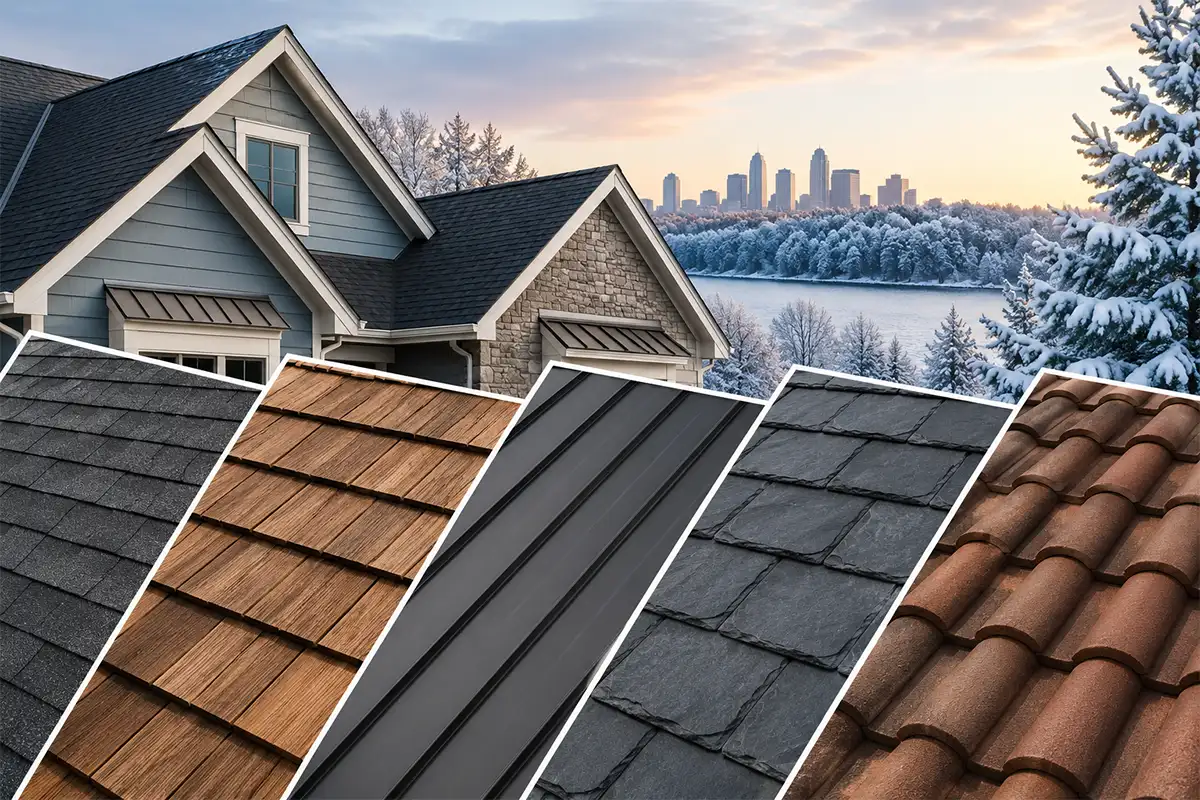
Choosing a new roof is a big decision. The material you pick affects cost, durability, and how well your home holds up against Minnesota weather. Cold winters, heavy snow, and summer hail all play a role in what works best here.
This guide breaks down the most common roofing materials so you can make an informed choice.
Asphalt Shingles
Asphalt shingles are the most popular roofing choice in Minnesota, and for good reason.
Pros:
- Affordable upfront cost
- Wide range of colors and styles
- Easy for most roofers to install and repair
- Decent performance in snow and cold
Cons:
- Shorter lifespan than metal or slate, usually 20 to 25 years
- Can crack in extreme cold
- Prone to wind damage in severe storms
Asphalt shingles work well for homeowners who want a reliable, budget-friendly option. Look for shingles rated for high wind and impact resistance, since Minnesota sees both strong storms and hail.
Metal Roofing
Metal roofing has grown popular across Minnesota, especially for homeowners who want long-term durability.
Pros:
- Lasts 40 to 70 years depending on the type
- Sheds snow quickly, reducing ice dam risk
- Resistant to fire and wind
- Energy efficient, reflecting heat in summer
Cons:
- Higher upfront cost than asphalt
- Can be noisy during heavy rain or hail without proper insulation
- Some styles show dents from large hail
Metal roofing is a strong choice for Minnesota winters. Its slick surface helps snow slide off instead of building up, which lowers the chance of ice dams forming along the edges.
Wood Shakes and Shingles
Wood roofing gives homes a natural, rustic look, but it comes with tradeoffs in a climate like Minnesota’s.
Pros:
- Attractive, natural appearance
- Good insulation properties
- Can last 25 to 30 years with proper care
Cons:
- Requires regular maintenance
- Prone to moisture damage and rot in humid or snowy conditions
- Higher fire risk unless treated
- More expensive than asphalt
Wood roofing can work in Minnesota, but it needs diligent upkeep to handle moisture from snow and rain. It is best suited for homeowners willing to invest in ongoing maintenance.
Slate Roofing
Slate is one of the most durable and long-lasting roofing materials available.
Pros:
- Can last 75 to 100 years or more
- Extremely durable against weather
- Fire resistant
- Distinctive, high-end appearance
Cons:
- Very expensive
- Heavy, often requiring extra structural support
- Installation requires specialized skill
- Limited number of experienced installers in some areas
Slate is a premium option. It performs well in Minnesota’s climate but the high cost and structural requirements make it less common for typical residential homes.
Synthetic and Composite Roofing
Synthetic roofing materials are designed to mimic the look of slate or wood while offering better durability and lower maintenance.
Pros:
- Lighter than natural slate
- Resistant to moisture, rot, and impact
- Often comes with long warranties
- Good performance in freeze-thaw conditions
Cons:
- Can be pricier than asphalt
- Fewer installers have experience with these materials
- Newer product with less long-term track record
Synthetic roofing is worth considering if you want the appearance of premium materials without the full cost or weight of slate.
Clay and Concrete Tile
Tile roofing is less common in Minnesota, but it does appear on some homes.
Pros:
- Long lifespan, often 50 years or more
- Fire resistant
- Distinctive look
Cons:
- Heavy, requires strong roof framing
- Can crack under heavy snow load or impact
- Not always ideal for extreme freeze-thaw cycles
- Higher cost
Tile roofing works better in warmer, drier climates. Minnesota homeowners considering tile should talk to a structural engineer and an experienced roofer first.
What Minnesota Homeowners Should Consider
When choosing a roofing material, think about these local factors:
Snow load. Heavy, wet snow is common in Minnesota winters. Your roof structure and material need to handle that weight.
Ice dams. Materials that shed snow well, like metal, can reduce ice dam problems.
Hail resistance. Impact-resistant shingles or metal panels can reduce storm damage.
Temperature swings. Materials need to hold up against freezing winters and warm, humid summers without cracking or warping.
Energy efficiency. Some materials, like metal, help regulate indoor temperatures and can lower energy costs.
Comparing Average Lifespan
| Material | Average Lifespan |
|---|---|
| Asphalt Shingles | 20 to 25 years |
| Wood Shakes | 25 to 30 years |
| Synthetic/Composite | 30 to 50 years |
| Metal | 40 to 70 years |
| Clay/Concrete Tile | 50+ years |
| Slate | 75 to 100+ years |
Final Thoughts
There is no single best roofing material for every home. The right choice depends on your budget, your home’s structure, and how long you plan to stay in the house. For many Minnesota homeowners, asphalt shingles offer a solid balance of cost and performance, while metal roofing is a strong long-term investment for those wanting to reduce ice dam issues and maximize durability.
Talk to a local roofing contractor who understands Minnesota’s climate. They can help you weigh the pros and cons based on your specific home and budget.